
Tooling
The Working Man's PEEK
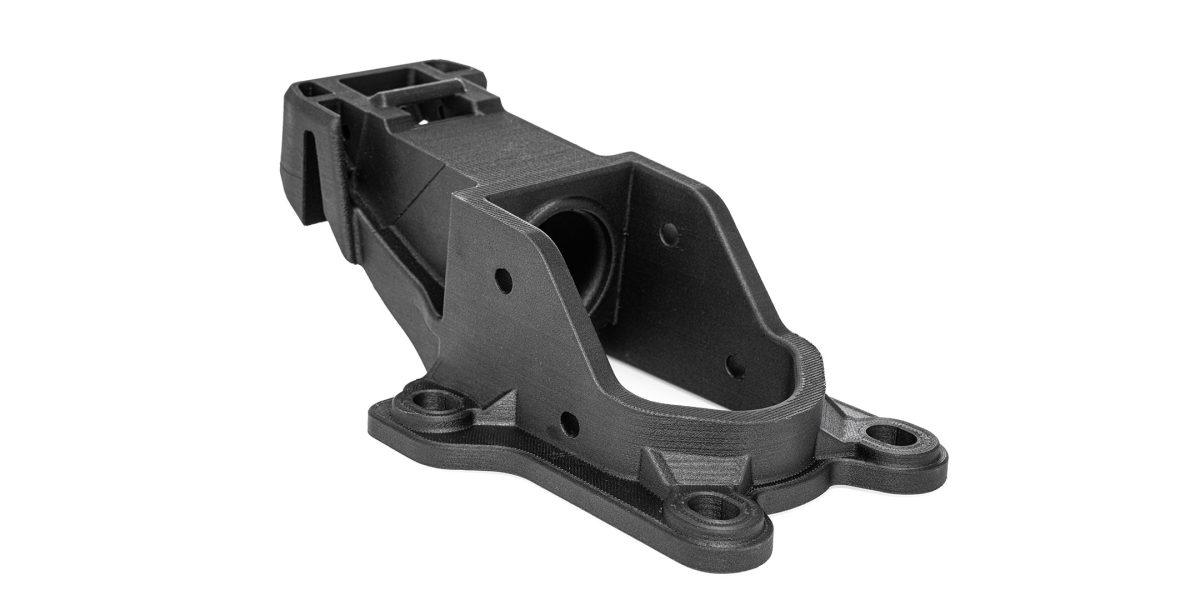
Why PPS-CF is the "Working Class" PEEK
In the hierarchy of high-performance thermoplastics, PEEK (Polyetheretherketone) often sits on the throne. It is strong, chemically inert, and exceptionally heat resistant. It is also, famously, exceptionally expensive—making "PEEK printing services" a significant line item in any R&D budget.
But for 90% of industrial applications requiring extreme chemical or thermal resistance, PEEK is overkill.
Enter PPS-CF (Carbon Fiber Reinforced Polyphenylene Sulfide). At Morin 3D, we view PPS-CF as the "pragmatic super-polymer." It offers a near-identical chemical resistance profile to PEEK and superior stiffness to PPSU, all while being significantly easier to process and lower in cost.
If you are searching for PPS printing in Canada or an alternative to expensive high-temp thermoplastics for under-hood automotive components, this guide explains why PPS-CF might be the smarter choice.
What is PPS-CF?
Polyphenylene Sulfide (PPS) is a semi-crystalline thermoplastic known for one defining trait: it is virtually insoluble. There are almost no known solvents that can dissolve PPS at temperatures below 200°C.
By reinforcing this base resin with 10–15% chopped carbon fiber (CF), we achieve two critical engineering advantages:
- Increased Stiffness: The carbon fiber boosts the tensile modulus significantly, reducing the flexibility that unreinforced PPS might exhibit.
- Thermal Stability: The fibers stabilize the material during the printing process, reducing the high warp rate typically associated with high-temp semi-crystalline plastics.
The "Big Three" Comparison: PPS-CF vs. The Alternatives
When selecting a high-performance material, engineers are usually weighing PPS-CF against PEEK, PEKK, or PPSU. Here is how they stack up in a functional production environment.
1. Chemical Resistance (The PEEK Rival)
This is where PPS-CF shines. Like PEEK, PPS-CF is impervious to automotive fluids (gasoline, brake fluid, transmission oil, antifreeze) and broad-spectrum industrial solvents (MEK, acetone, xylenes).
- Winner: Tie (mostly). Both materials survive environments that would liquefy ABS or stress-crack Polycarbonate.
- The Difference: You pay roughly 50-60% less for PPS-CF than PEEK.
2. Thermal Performance (The Heat Shield)
PPS-CF boasts a Heat Deflection Temperature (HDT) of approximately 260°C (at 0.45 MPa). While PEEK can push slightly higher in continuous service ratings, PPS-CF easily handles the 150°C–200°C range required for engine bay components or sterilization cycles.
3. Mechanical Strength (The PPSU Trade-off)
This is the critical decision gate.
- Choose PPS-CF if you need Rigidity. It is stiff and dimensionally stable. It will hold tight tolerances under load.
- Choose PPSU if you need Toughness. PPSU (Polyphenylsulfone) is less stiff but has superior impact resistance and hydrolysis resistance (it loves steam). PPS-CF is stronger but more brittle; it prefers a static load over a high-impact shock.
Why We Recommend PPS-CF for Industrial Tooling
At Morin 3D, we frequently steer clients toward PPS-CF for "Check Fixtures" and "CMM Nests."
Imagine you are building a fixture to hold a metal part while it is being cleaned in a solvent bath.
- Aluminum: Expensive to machine, heavy, and potentially reactive with specific acids.
- Nylon 12 (PA12): Will swell or degrade in contact with aggressive solvents.
- PPS-CF: Can be printed overnight, costs a fraction of the machining time, stays dimensionally neutral in the solvent, and is stiff enough to hold the part firmly.
Processing: How We Print It
One of the hidden costs of PEEK printing services is the hardware. Printing PEEK requires a chamber temperature exceeding 100°C—machinery that often costs upwards of $50,000.
PPS-CF is more forgiving, making it cheaper for both of us. We process it on our high-temperature industrial FDM systems with chamber temps in the 60°C–90°C range. However, it demands:
- Hardened Tooling: The carbon fibers are abrasive and will ruin a standard brass nozzle in hours. We use hardened steel or ruby-tipped nozzles.
- Active Drying: PPS is not as hygroscopic as Nylon, but moisture creates steam bubbles that ruin the surface finish. We dry all PPS-CF filament before printing.
- Ventilation: While safe when managed correctly, melting PPS can release off-gasses. Our facility utilizes active filtration to ensure safety.
Summary: When to Use PPS-CF
- You need: Resistance to hydraulic fluid, fuel, or strong acids.
- You need: Service temperatures above 150°C.
- You want: To save 40-60% on unit cost compared to PEEK.
- You can accept: Lower impact strength (it is not a snap-fit material).
Give it a try.
We print all your parts here in Canada. Upload your file and get a price in seconds.
Frequently Asked Questions (FAQ)
Q: Is PPS-CF cheaper than PEEK for 3D printing?
A: Yes. PPS-CF filament typically costs 50–60% less than PEEK filament. Additionally, because PPS-CF can be printed at slightly lower chamber temperatures (60–90°C) than PEEK (100°C+), the machine time and energy costs are often lower, making it a budget-friendly alternative for non-implantable industrial parts.
Q: What is the maximum service temperature for 3D printed PPS-CF?
A: PPS-CF has a Heat Deflection Temperature (HDT) of approximately 260°C at 0.45 MPa. However, for continuous use under load, we recommend a safe operating limit of 200°C–220°C. Above this threshold, mechanical properties may begin to degrade over long durations.
Q: Is PPS-CF chemically resistant to gasoline and solvents?
A: Yes. PPS (Polyphenylene Sulfide) is inherently resistant to automotive fuels, including gasoline, diesel, and brake fluid. It is also insoluble in most organic solvents below 200°C. However, it is not recommended for use with strong oxidizing acids (like nitric acid) or for long-term exposure to high-pressure steam (hydrolysis), where PEEK performs better.
Q: Does 3D printed PPS-CF conduct electricity?
A: Yes, to a degree. The carbon fiber reinforcement creates a conductive network within the plastic. Most PPS-CF filaments have a surface resistivity between 10^3 and 10^5 ohm/sq, making them suitable for ESD (Electrostatic Discharge) safe fixtures and jigs. If you need a purely electrically insulating part, you must use unreinforced PPS or PEEK.
Q: Is PPS-CF safe to 3D print? (Fumes & Toxicity)
A: PPS requires careful safety management. When melted, PPS can off-gas sulfur-based compounds (often smelling like rotten eggs), which can be an irritant. At Morin 3D, we print PPS-CF exclusively in industrial enclosures with active carbon filtration and external ventilation to ensure operator safety. It should not be printed on open desktop printers in unventilated offices.
Q: Can PPS-CF replace aluminum for tooling?
A: For many "soft tooling" applications, yes. With a tensile modulus often exceeding 6 GPa, PPS-CF is stiff enough to replace aluminum for CMM fixtures, welding jigs, and alignment guides.
Upload Your File. Pick a Material. Print.
Get real-time pricing, lead times, and material options in just a few clicks. No back-and-forth emails. No guesswork.