
 Fused Deposition Modelling · Victoria, BC
FDM 3D Printing Canada
Strong plastic parts, from one-offs to batches of hundreds
Fused deposition modelling (FDM) builds parts from melted plastic, one layer at a time. No tooling and no MOQ. Great for low-cost, real-world solutions.
FDM printing for functional parts, at any size or quantity
FDM is our workhorse: replacement parts, site parts like 3D printed concrete forms, fixtures, models and large-format one-offs. Here's what it's done for clients across BC.
 PETG
PETGBird Construction
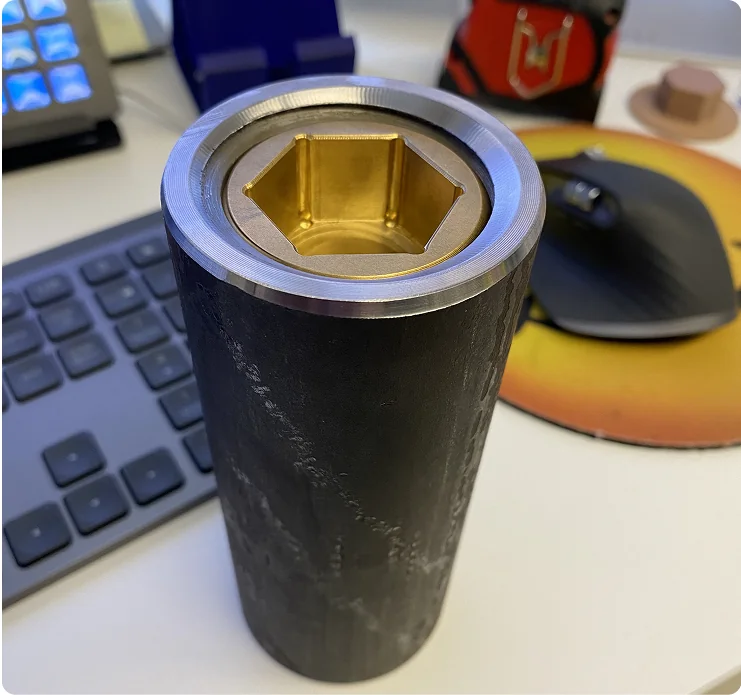
Snap-on caps kept every levelling rod clean through a concrete pour at UVic.
Read the case study →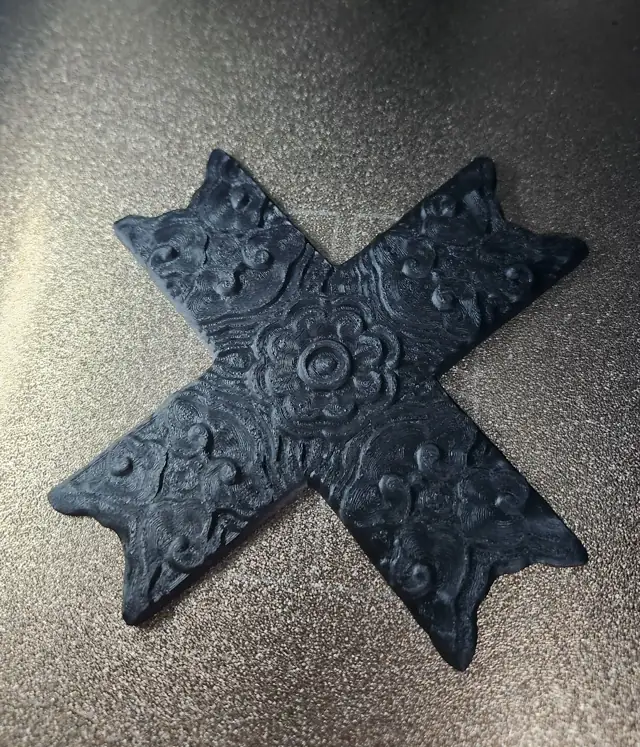 Scan + FDM
City of Victoria
Scanned from a 1981 original, sample in 24 hours, delivered over the holidays.
Read the case study →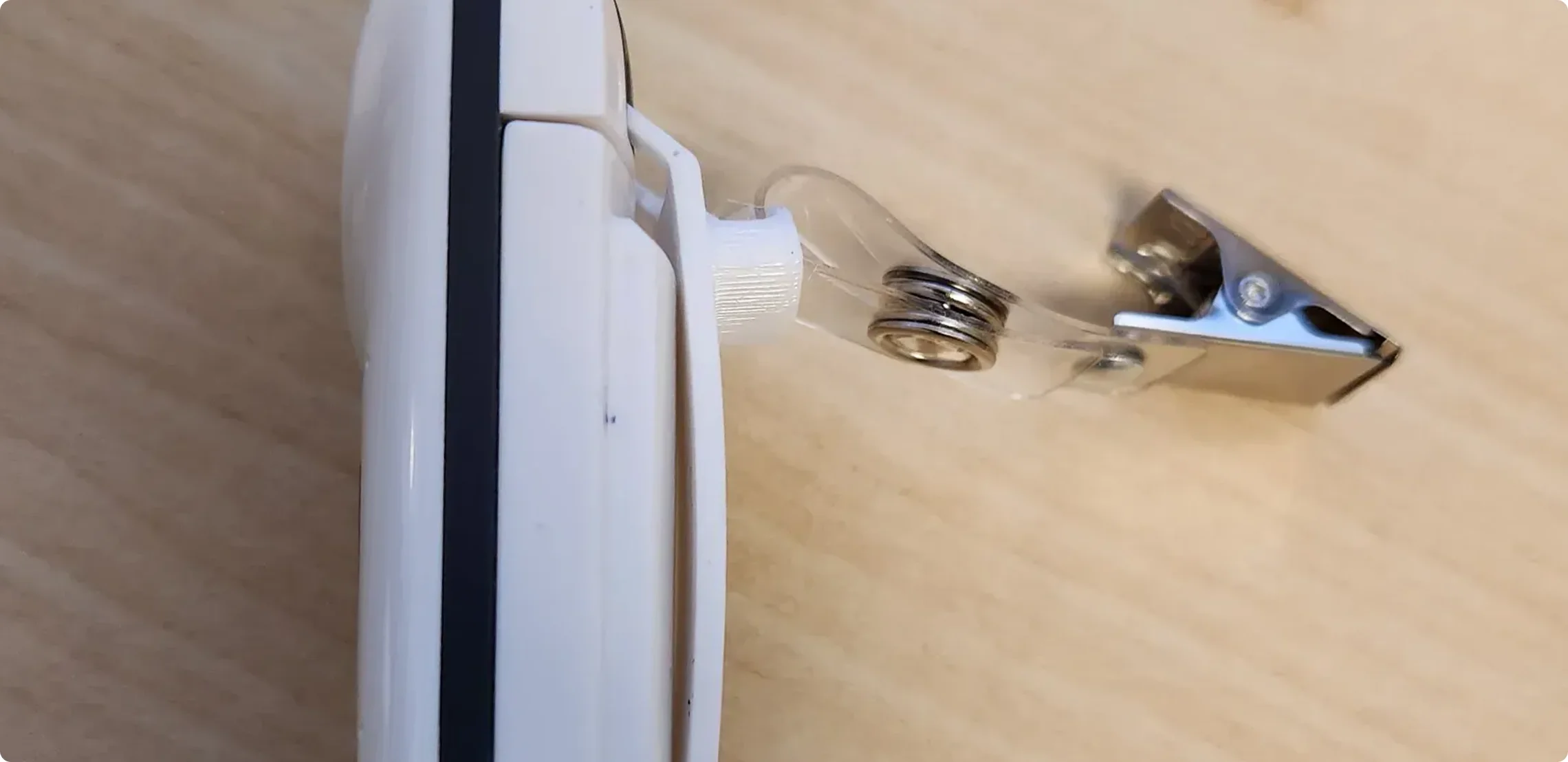 PETG
PETGIsland Health
Stronger replacement clips turned a five-figure yearly cost into a minor repair.
Read the case study →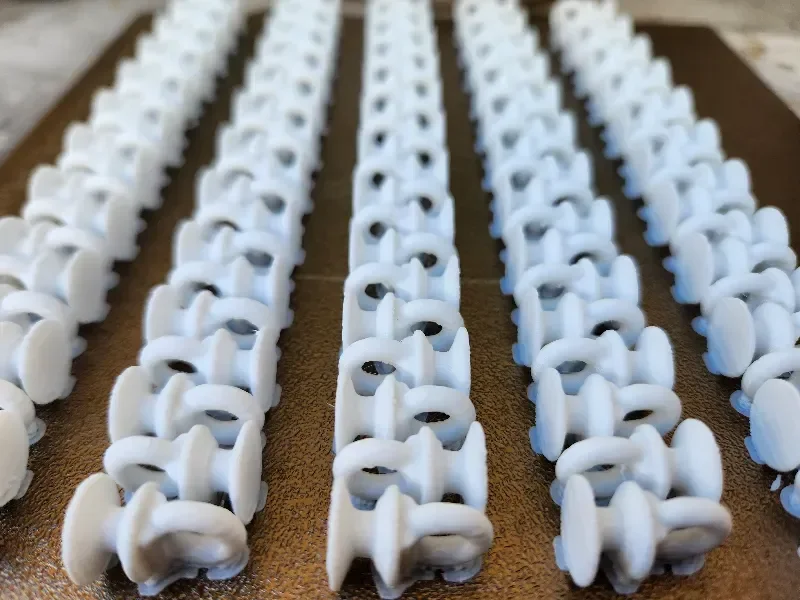 PETG
PETGRoyal Canadian Navy
Frigate parts whose maker had closed, re-engineered tougher and printed in batches.
Read the case study →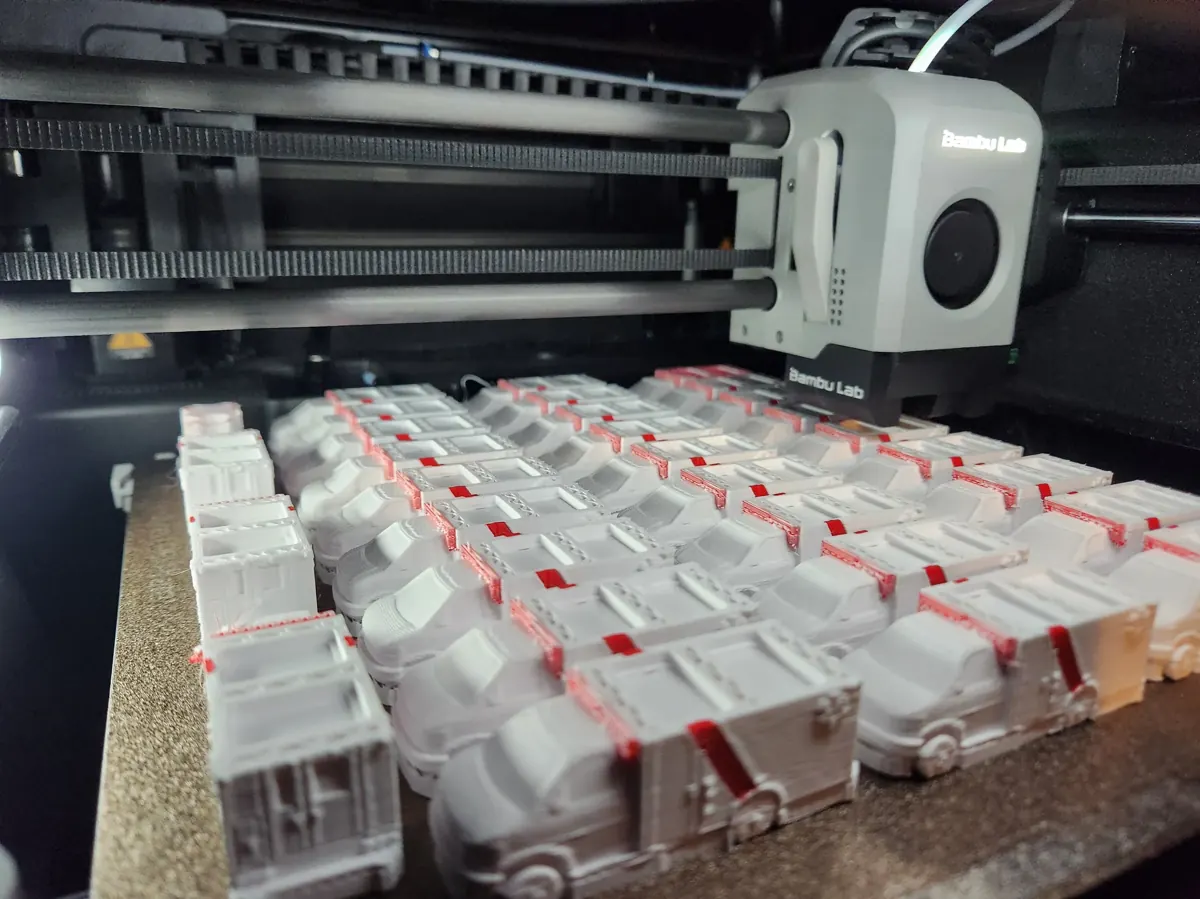 PETG
PETGBC Emergency Health Services
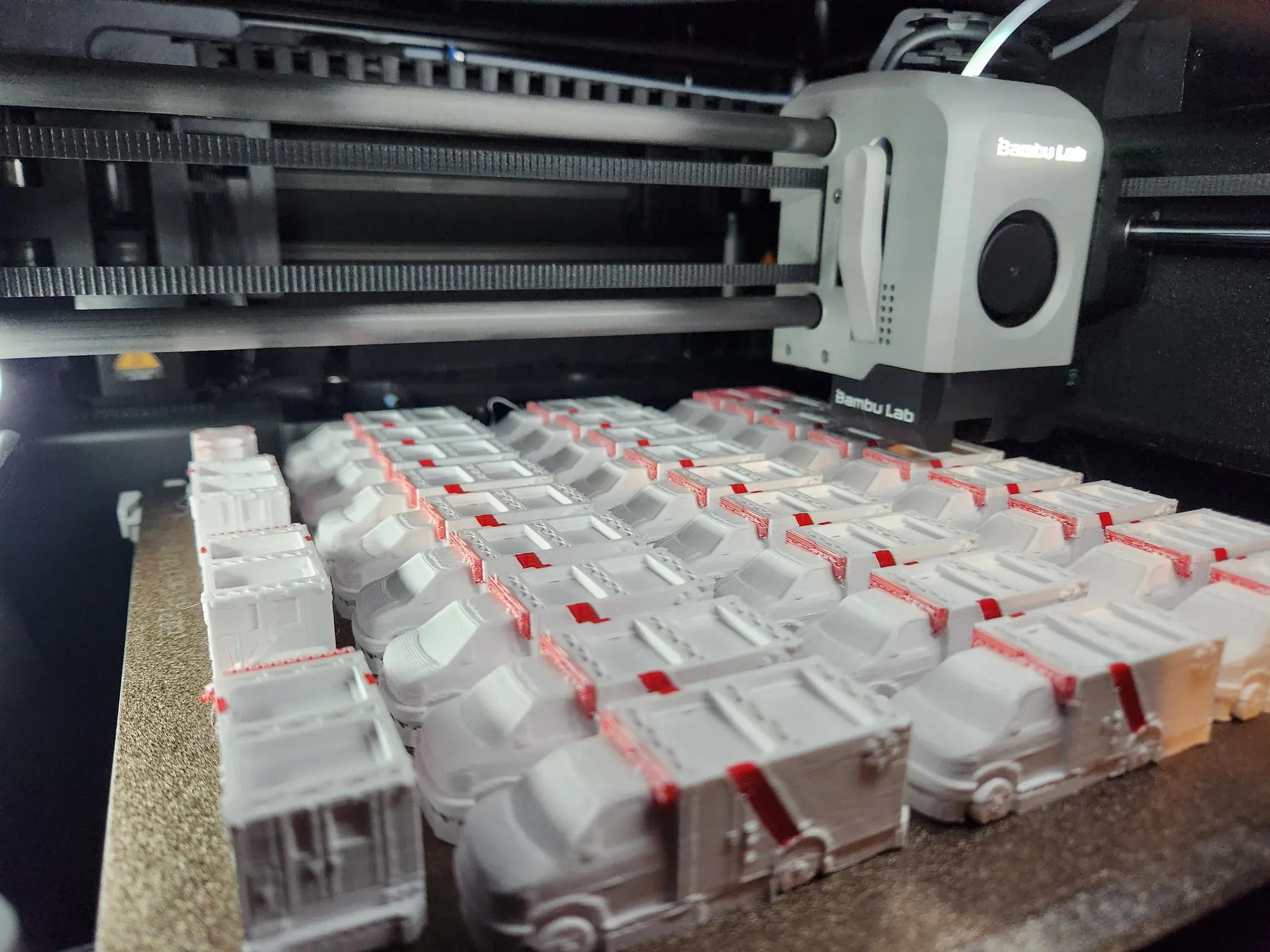
Ambulances, a helicopter and a bus in matching livery for a province-wide exercise.
Read the case study → PETG
PETGW̱SÁNEĆ Marine Guardians
A catch handle for launching and recovering a survey drone from a moving boat.
Read the case study →






FDM materials: pick by what the part has to survive
Find the row that matches your part, then step right for more performance (and cost). Most jobs stop at the middle column.
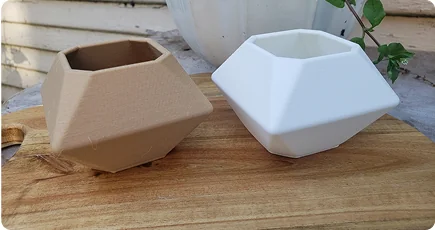
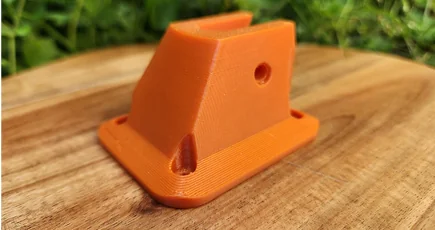
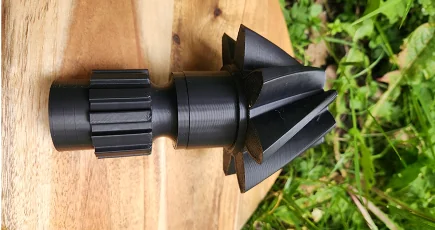
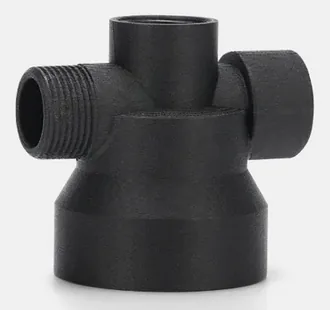
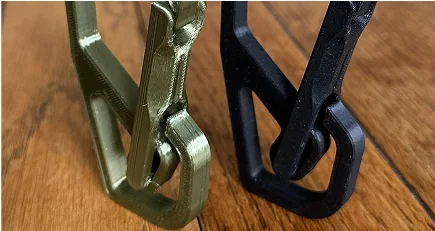
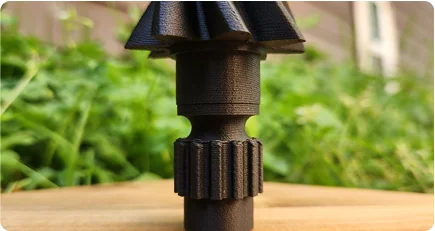
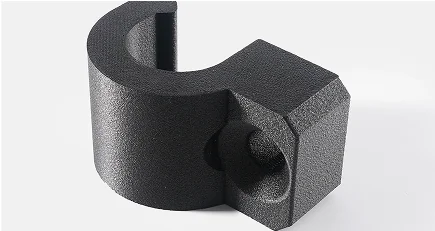
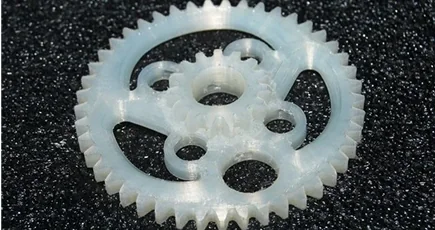
Crisp detail and the most colour choice, including matte and wood finishes. For models and indoor parts that stay cool.
Along vs across layers
Colours
Our everyday workhorse: tougher than PLA, shrugs off water and handles light outdoor use. Most of our production runs are PETG.
Along vs across layers
Colours
Carbon fibre filled PETG: stiffer, with a matte finish that hides layer lines, at close to PETG pricing.
Colours
Our softest FDM flexible: rubber-like at Shore 85A and stretches about 6× before breaking. A better fit than 95A where a part has to squash, seal or absorb shock.
Colours
Rubber-like and nearly impossible to tear. Stretches over 6× before breaking. Also available in a softer 85A and a firmer 98A.
Along vs across layers
Colours
Firmer than 95A, so it holds its shape under load and still flexes. Bambu rates it Shore 68D, roughly 98A. Stretches over 6× before breaking, with little stringing.
Along vs across layers
Colours
The classic enclosure plastic: tough, impact-resistant and better with heat than PETG.
Along vs across layers
Colours
Glass-filled ABS: stiffer and more dimensionally stable than plain ABS for fixtures that need to hold their shape.
Along vs across layers
Colours
ABS's outdoor sibling. Holds its colour and strength in sun and rain, so it's our pick for anything that lives outside.
Along vs across layers
Colours
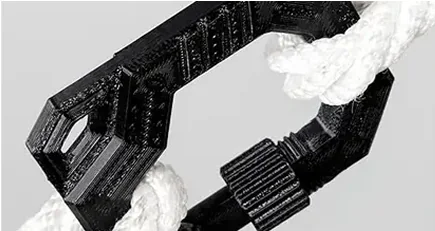
Very tough and strong in every direction, with good heat resistance. For guards and parts that get knocked around.
Along vs across layers
Colours
Flame-retardant polycarbonate for electronics enclosures and anywhere fire safety is specified.
Along vs across layers
Colours
Carbon fibre filled nylon: stiff, strong and light. A go-to for structural brackets and jigs. Best kept out of long-term damp.
Along vs across layers
Colours
Carbon fibre filled ASA: outdoor weather resistance with extra stiffness and a clean matte-black finish.
Along vs across layers
Colours
Stiff and heat-resistant, and it absorbs far less moisture than nylon, so it performs the same wet or dry.
Along vs across layers
Colours
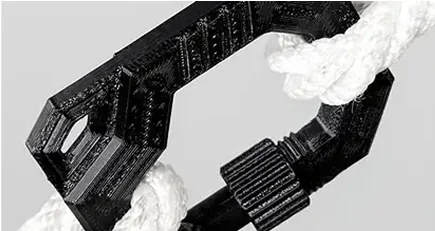
Carbon fibre filled polycarbonate: stiffer and more dimensionally stable than PC for precise, warm-running parts.
Colours
High-temperature carbon fibre filled nylon that takes up less moisture than PA6-CF. Engine bays, ducts, hot fixtures.
Along vs across layers
Colours
Our strongest and stiffest filament, with heat resistance past 220 °C. For parts that would otherwise be machined aluminum.
Along vs across layers
Colours
The highest heat resistance we offer, plus resistance to acids, alkalis, oils and solvents. Self-extinguishing away from flame.
Along vs across layers
Colours
Fluoropolymer that resists acids, bases and most solvents, with UL 94 V-0 and no strength loss after long UV exposure. Not for heat.
Colours
Datasheet values: printed test bars at 100% infill, along the layers (TPU 85A is from Siraya Tech's sheet, which doesn't state print direction). Heat = heat deflection temperature at 0.45 MPa. $ = relative cost. Need something not listed? Ask about a material →
30+ colours in stock
Print in the colour you need, no painting. Carbon fibre filled materials are black; ask about anything else.
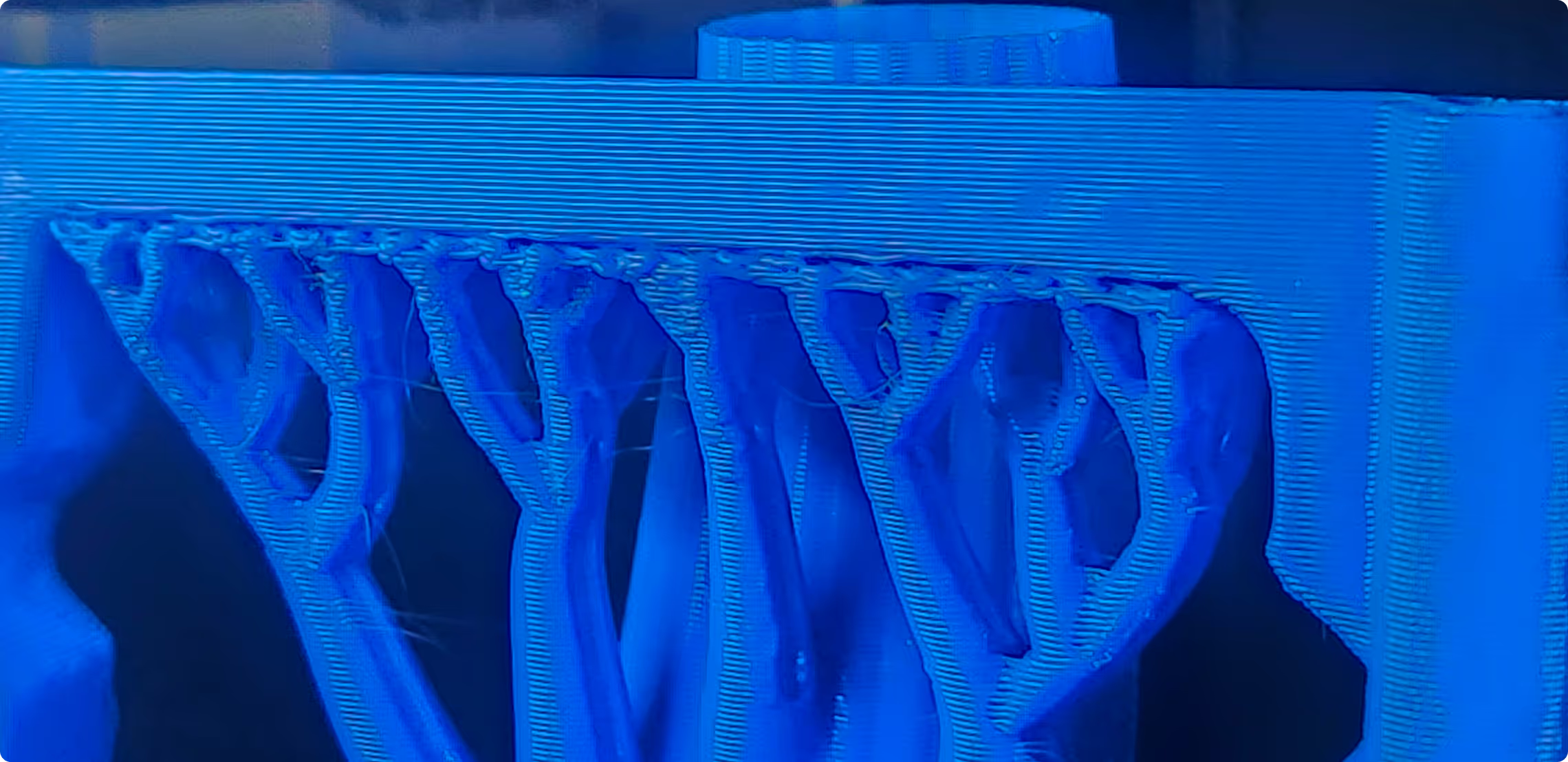
How FDM printing works: from file to part
FDM (fused deposition modelling, also called fused filament fabrication or FFF) melts plastic filament and lays it down through a heated nozzle, one thin layer at a time, until the part is built. There's no tooling and no minimum order quantity, so one part or a few hundred start the same way.
Upload & quote
Pick a material, colour, infill and quantity for an instant price.
File check
We check every file for printability before it goes on a printer.
Parts build layer by layer on calibrated printers; batches run across several at once.
Clean up & ship
Supports removed, parts checked and shipped in 2–4 business days.
No 3D file? We can model it in CAD or 3D scan the original.
Designing parts for FDM
Keep these in mind when you model a part, and choose your infill when you order. To check your file against these limits automatically, run a DFM review.
Infill: you choose how solid
Parts are solid walls around a gyroid lattice inside. Pick the infill when you order; drag to see what changes.
Illustrative. 15–25% suits most parts; go higher for parts that take load.
Steeper faces need supports, which leave small marks where they're removed.
0.2 mm is standard. Finer layers smooth curves; thicker layers print big parts faster.
or ±0.5%, whichever is greater.
Thicker walls add the most strength per dollar.
Leave clearance between parts that fit together, so they still fit at tolerance.
Large-format parts in one piece; bigger ones are split into keyed sections and bonded.
Good to know: FDM parts show fine layer lines and are weakest across their layers. If a smooth cosmetic surface or equal strength in every direction matters most, consider SLA or SLS.
FDM vs. SLA vs. SLS
Not sure FDM is right? Here's the short version. See all processes →
| Best for | Strength | Surface | Max size | Cost | |
|---|---|---|---|---|---|
| FDM | Brackets, enclosures, fixtures, large parts, budget batches | Good; strongest along the layers | Visible layer lines | Up to 1 m³ | Lowest |
| SLA | Fine detail, smooth cosmetic parts, clear & specialty resins | Resin-dependent: rigid to rubbery | Smoothest, small support marks | 200 × 125 × 210 mm | Mid |
| SLS | Functional end-use parts, snap-fits, complex geometry | High, near-isotropic | Fine matte, no support marks | 155 × 155 × 295 mm | Best in batches |
FDM 3D printing FAQ
What is FDM 3D printing?
FDM (fused deposition modelling, also called fused filament fabrication or FFF) is the most common type of 3D printing. A heated nozzle melts plastic filament and lays it down one thin layer at a time, each fusing to the one below, until the part is complete. It's the lowest-cost way to make strong, functional plastic parts, from one-offs to large-format parts up to 1 m³.
How does FDM compare to SLA and SLS?
FDM is the lowest-cost way to get strong plastic parts, and the only one of the three that prints parts up to 1 m³ in one piece. It also has the widest material choice, from PLA to carbon fibre filled and chemical-resistant plastics. SLA gives smoother surfaces and finer detail; SLS gives more uniform nylon parts with no supports. Choose FDM for brackets, enclosures, fixtures, large parts and budget batches.
Which FDM material should I use?
PETG for most everyday parts. ASA for anything that lives outdoors. ABS or polycarbonate for heat and impact. PA6-CF or PET-CF (carbon fibre filled, often spelled carbon fiber) when a part has to be stiff and light, PPA-CF or PPS-CF for high loads and heat, TPU for flexible parts and PVDF for harsh chemicals. Tell us what the part does and we'll recommend one.
How strong are FDM parts?
Strong enough for real-world use when the material, walls and infill suit the job. FDM parts are strongest along their layers: on the datasheet, PETG is 51 MPa along the layers and 35 MPa across them. For parts that take real load, choose a stronger material or higher infill, or ask us to look over the design.
What is infill, and do I need 100%?
Most FDM parts are solid walls around a lattice inside, and you choose the infill percentage when you order. Around 15–25% suits most parts; go higher for parts that take load. More infill adds strength but also weight, print time and cost.
How accurate are FDM parts?
±0.25 mm or ±0.5%, whichever is greater. Lower-temperature materials like PLA and PETG hold size best. Flag critical fits such as bearings, press-fits and mating holes and we'll review them before printing.
What's the biggest part you can print?
Up to 1 m³ in one piece in-house, which makes FDM our large-format option. Larger parts are printed in sections that key together and bond cleanly; the life-size TEDxVictoria stage sign was built this way. Through our partner network we can also print single parts up to 2100 × 700 × 900 mm.
Can you print production batches?
Yes. No tooling and no minimum order quantity, so a batch is just a file and a quantity: 400+ thread caps for Bird Construction, 200 heritage brackets for the City of Victoria. Reorders print from the same file, so every batch matches.
What colours can you print?
PLA and PETG come in 12 colours each, plus matte and wood-look PLA. ASA, ABS and TPU come in a few colours each, and the carbon fibre filled materials are black. Need a specific colour? Ask and we'll try to source it.
Can FDM parts be used outdoors?
Yes. ASA and ASA-CF are made for sun and weather, and PVDF shows no strength loss after long UV exposure. PETG handles light outdoor use. Avoid PLA outside: it softens in heat.
Will I see layer lines?
Yes, FDM parts show fine layer lines. Finer layer heights reduce them. If a smooth cosmetic surface is the priority, SLA is usually the better fit: see why SLA prints smoother.
How fast can you ship FDM parts?
Most orders ship in 2–4 business days, with tracked shipping across Canada or free local pickup in Victoria, BC. Very large parts and big batches can take longer; rush may be available.
How much does FDM printing cost in Canada?
It depends on size, material, print time and quantity. PLA and PETG are the cheapest; carbon fibre filled and high-performance plastics cost more. Upload a file to the instant quote for a price in seconds. No MOQ, shipped from Victoria, BC across Canada.
Upload a file. Get a price in seconds.
Strong, affordable plastic parts shipped across Canada in 2–4 business days.