 Selective Laser Sintering · Victoria, BC
SLS 3D Printing Canada
Nylon prototypes & production on demand
Selective laser sintering (SLS) fuses nylon powder with a laser, so parts need no supports, no tooling and no MOQ. Upload a CAD file and get functional PA12 parts shipped across Canada in 2–5 days.
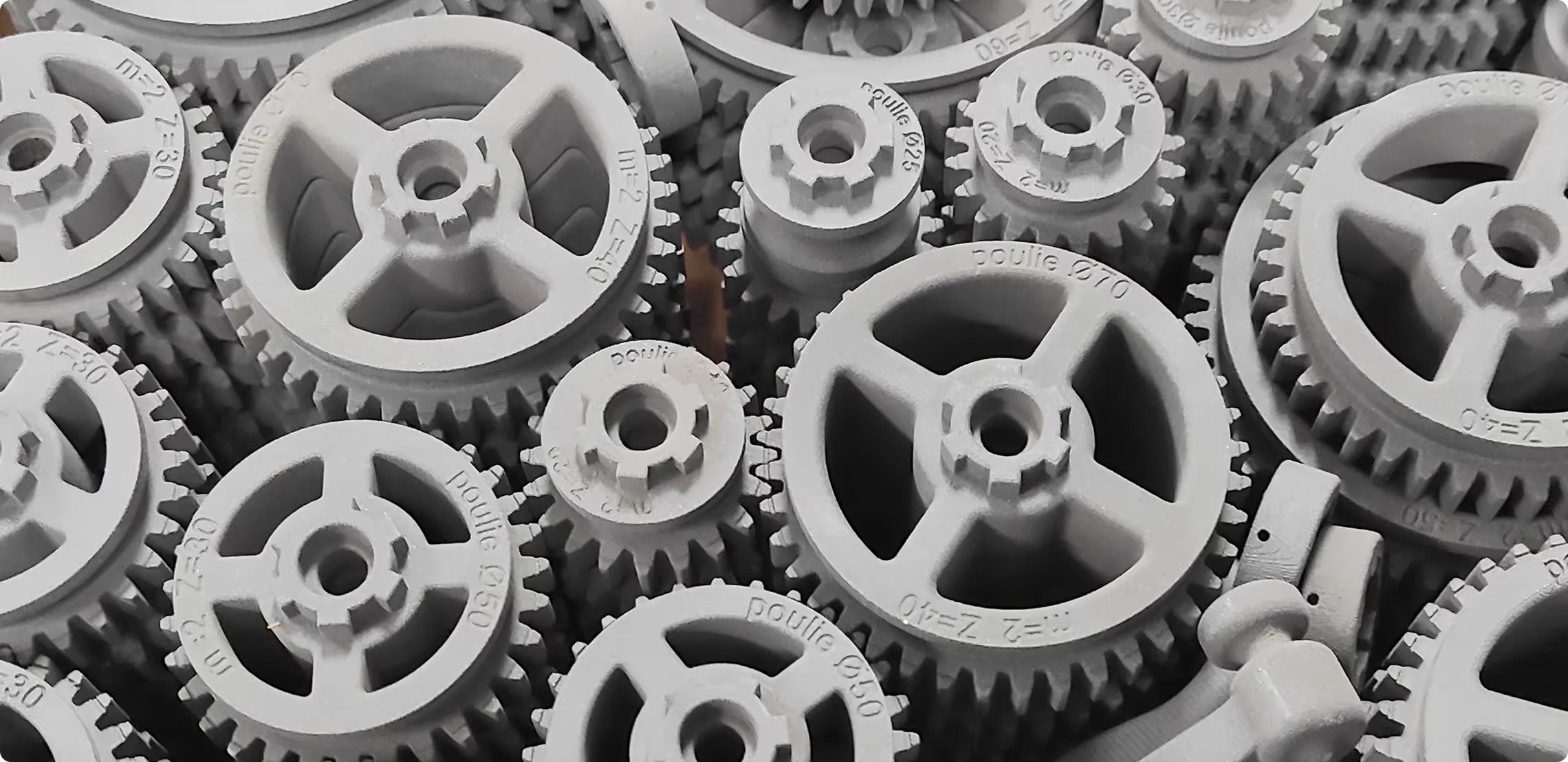
SLS parts we print: prototypes to production
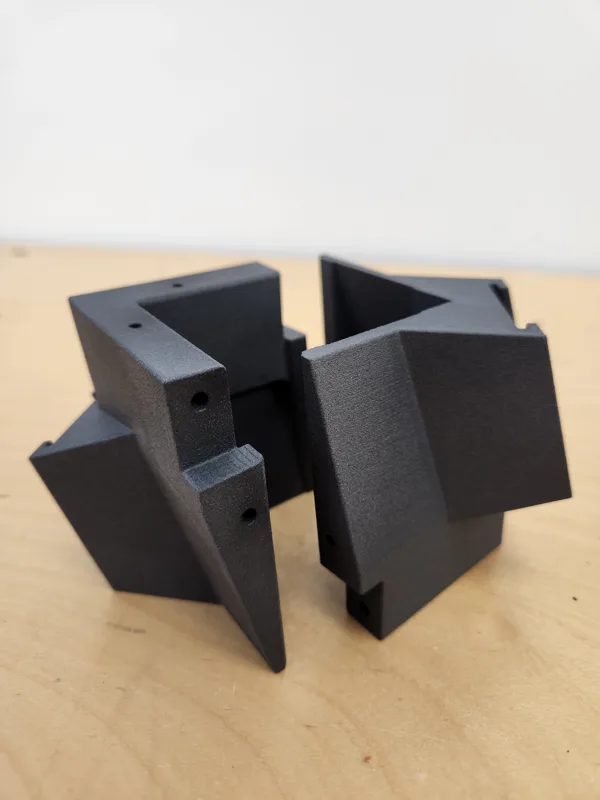
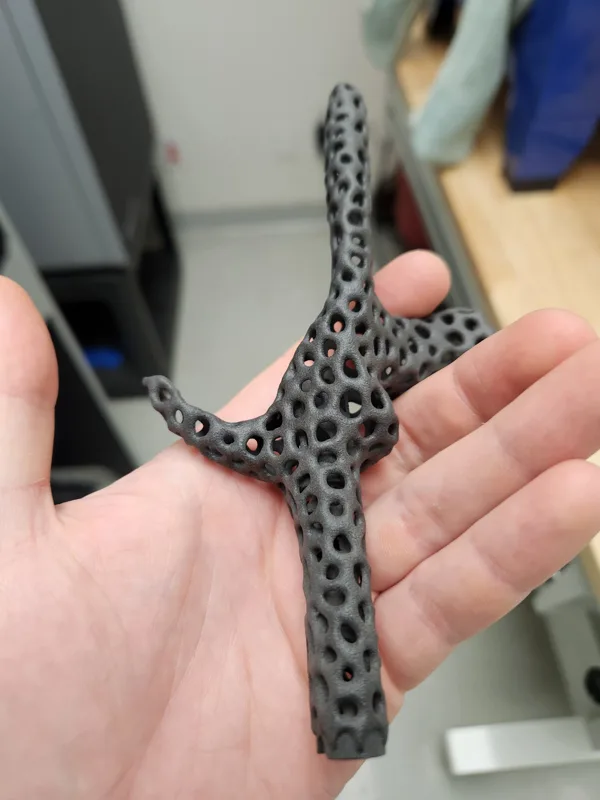
Functional prototypes and end-use parts where strength, detail and design freedom all matter.
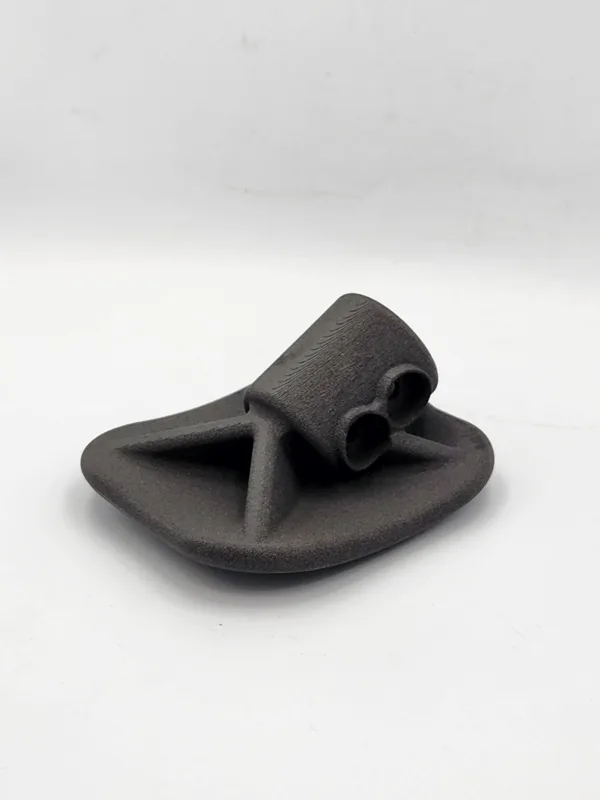
Wearables & eyewear
PA12 is certified for skin contact. Dyed to colour, no paint to wear off.
Why SLS?
- Premium surface finish
- Near-isotropic strength
- Good temperature resistance
- Chemically resistant
- Cheaper per part in batches
Sports, medical & orthotics
Biocompatible nylon for guards, prosthetic sockets, surgical guides and patient-specific devices.
Medical & dental capabilities →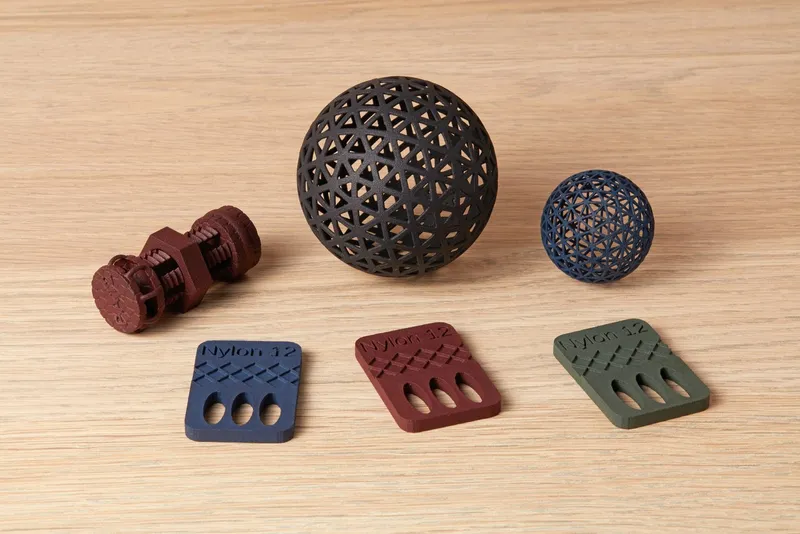
SLS materials: Nylon 12 (PA12)
We run Dark Grey PA12: the industry-standard SLS nylon. A tougher, more ductile grade is on the way.
Nylon 12 (PA12)
Strong, slightly flexible and chemically resistant. Certified biocompatible for skin contact.
Nylon 12 Tough
A more ductile PA12 that bends before it breaks: roughly double the impact strength and elongation of standard PA12. Certified for skin and mucosal membrane contact.
Ask about Nylon 12 Tough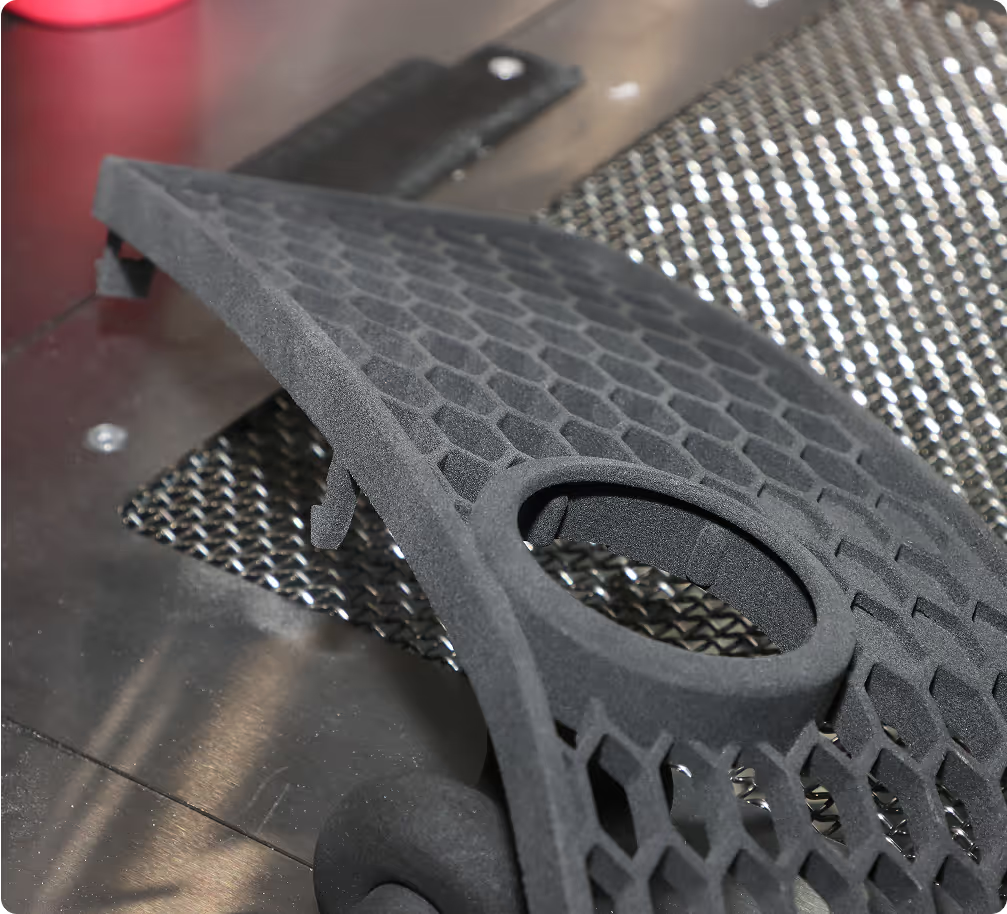
How SLS printing works: from file to finished part
Check & nest
We orient your parts and pack the build for the best price and finish.
Laser sinter
A laser fuses nylon powder in 0.1 mm layers. Loose powder supports everything.
Cool
The build cools slowly in the powder cake (12–24 h) so parts don't warp.
Depowder & bead blast
Powder is recovered, parts are blasted to a clean matte finish. Both included.
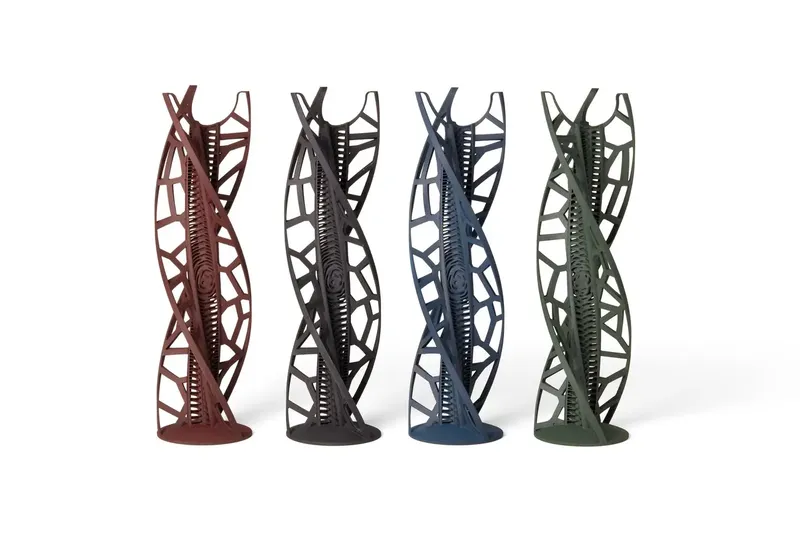
Dyed SLS nylon: colour that goes all the way through
Dyed after bead blasting, colour soaks into the nylon rather than sitting on top. No chipping, no added thickness, and it reaches internal channels that paint can't.
Good to know: dyed colour fades slightly with long UV exposure or hot washing, shades vary a little between batches (order matched assemblies together), and we don't Pantone-match.
Dyed SLS Nylon: Colour That Doesn't Chip →Photos: Formlabs
SLS vs. FDM vs. SLA
Not sure SLS is right? Here's the short version. See all processes →
| Best for | Strength | Surface | Cost | |
|---|---|---|---|---|
| SLS | Functional end-use parts, snap-fits, complex geometry | High, near-isotropic | Fine matte, no support marks | Best in batches |
| FDM | Large parts, quick jigs, budget prototypes | Good, directional | Visible layer lines | Lowest |
| SLA | Fine detail, smooth cosmetic models | Moderate, can be brittle | Smoothest | Mid |
SLS 3D printing FAQ
How does SLS compare to FDM and SLA?
SLS produces durable nylon parts with excellent design freedom and strength that's close to uniform in all axes. FDM is cheaper and great for larger parts but shows layer lines and has directional strength. SLA gives the highest detail and smoothest surfaces, but many resins are less impact-resistant than nylon.
How does SLS compare to MJF?
Both fuse PA12 nylon powder and produce similar strength and accuracy. MJF (Multi Jet Fusion) parts come out grey and are usually dyed black; SLS parts have a slightly finer, more uniform matte surface and take dye in a wider range of shades. For most functional parts the two are interchangeable, and SLS is usually the more economical choice at low volumes.
Why does SLS take longer than FDM?
Parts need 12–24 hours of gradual cooling in the powder bed to prevent warping, then depowdering. SLS can batch many parts in one build though, so multi-part orders are often faster overall.
Are SLS parts as strong as injection-moulded?
Often comparable for PA12 applications, especially prototypes and low-volume production. Properties depend on geometry and settings, and SLS is more uniform than FDM but not identical to moulding in every direction.
What affects SLS cost?
Part volume, how efficiently it nests in the build, material and finishing. Ordering several parts together usually lowers the per-part price. Pricing is upfront via the instant quote.
Can SLS parts be watertight?
Standard SLS is slightly porous. Walls over 3 mm are watertight for most uses; for air-tight or pressurised parts, add sealing.
What's the maximum part size?
155 × 155 × 295 mm. Larger parts can be printed in sections and bonded, or we can use partner facilities with larger systems.
What is SLS used for?
Functional prototypes, low-to-medium volume production parts, complex geometries with internal features, living hinges and snap-fits, aerospace and automotive components, medical devices and enclosures.
Can SLS parts be dyed?
Yes. We dye after bead blasting. Because we print in Dark Grey PA12 the result is deep, rich shades (black, navy, oxblood, forest, charcoal), not pastels. Order colour-matched assemblies in one batch.
Does dyeing change strength or dimensions?
No. Dye penetrates existing porosity, so nothing is added or removed. Colour can fade slightly under prolonged UV or hot washing; add a clear coat if that matters.
How much does SLS cost in Canada?
It depends on size, quantity and finishing. Upload a file to the instant SLS 3D printing quote for a price in seconds. No MOQ, shipped from Victoria, BC across Canada.
Upload a file. Get a price in seconds.
Tough, support-free nylon parts shipped across Canada in 2–5 days.