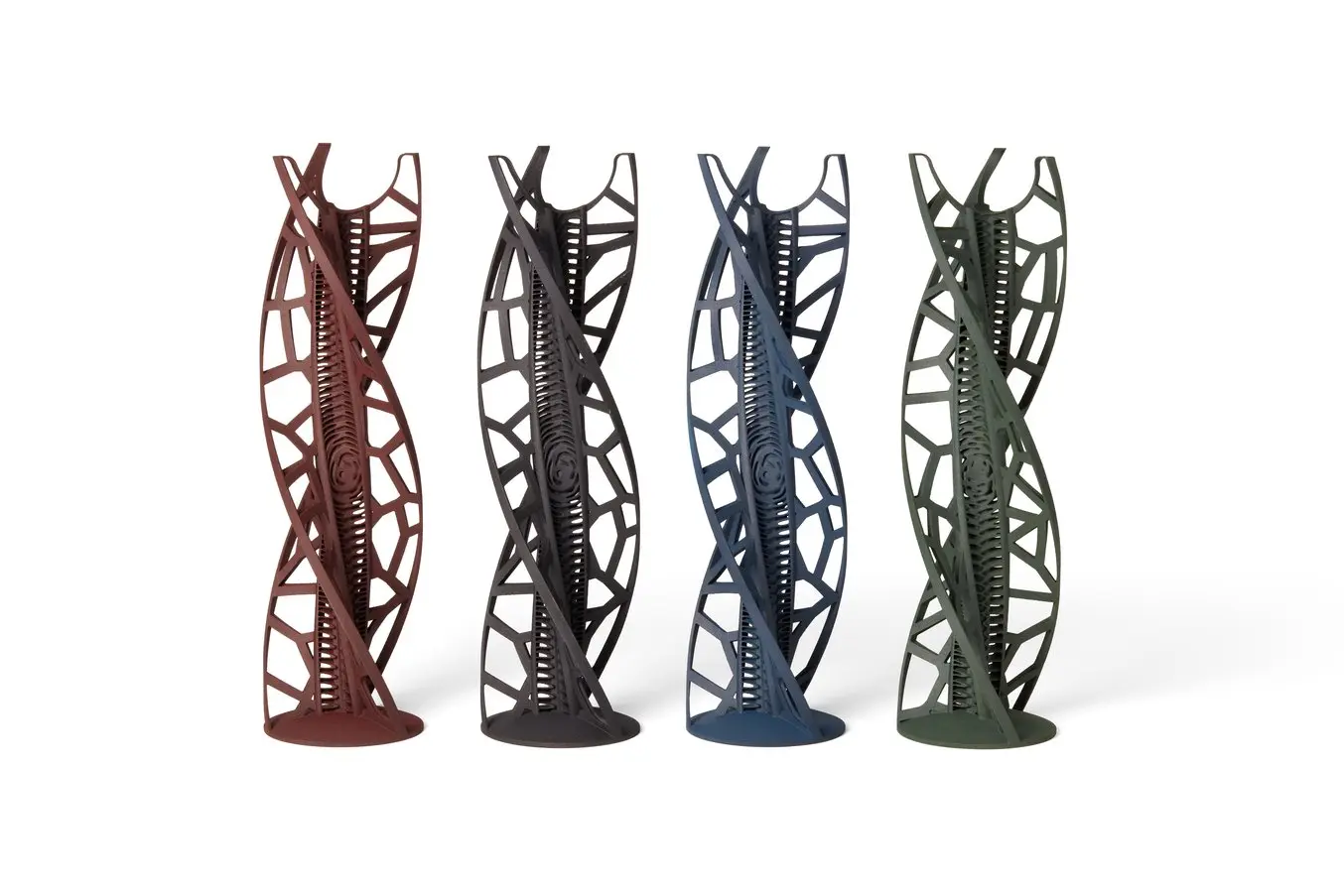
Painted functional parts fail in a predictable way. A scuff on a black bracket reveals grey underneath. A scratch on a housing shows the base material through the topcoat. The paint was never part of the part — it was a layer sitting on top of it, and layers on top of things eventually come off.
Dyed SLS nylon works differently. Instead of coating the surface, the colour goes into it. Here's how the process works, what it's actually good for, and where its limits are.
Dye vs. Paint: Where the Colour Lives
SLS (Selective Laser Sintering) parts aren't fully dense. Powder bed fusion leaves the sintered nylon with a small amount of surface porosity — enough that a heated dye bath can carry colour into the material rather than just onto it.
Paint and powder coating add a layer. Dye doesn't add anything measurable; it changes the colour of material that was already there. That distinction is the whole story:
What That Difference Actually Buys You
- Scuffs don't show through. Wear a dyed part down and you find more of the same colour, not a different one underneath.
- No line-of-sight limitation. A dye bath reaches internal channels, lattices, and undercuts that a spray gun physically can't see.
- No added wall thickness. Coatings build up a skin that can change fit on mating parts. Dye doesn't add a skin, so it doesn't change fit.
The Process
Four steps, from raw print to finished, coloured part:
- Print. The part is printed in Dark Grey PA12 nylon and cooled in the powder bed like any other SLS job.
- Bead blast. Glass bead blasting clears residual powder and opens the surface porosity the dye needs to take hold — this step happens on every SLS part regardless of whether it's getting dyed.
- Dye bath. Parts go into a heated bath (around 90°C) for roughly 20–25 minutes, depending on the target shade. Darker colours take less time; the deepest blacks and the lightest shades in a given hue sit at opposite ends of that range.
- Rinse and dry. Parts are rinsed, cooled, and dried before inspection and shipping.
What Colours You Can Actually Get
This is the part most dyed-nylon marketing glosses over, so we won't. We print in Dark Grey PA12 — there's no white powder in the shop. Dyeing a grey substrate produces deep, muted shades: black, navy, oxblood, forest green, and charcoal. It does not produce pastels, bright orange, sky blue, or anything else that depends on starting from white. If you've seen marketing photos showing SLS parts in a full rainbow, those were dyed from white powder, not grey.
We'd rather tell you that up front than have you design around a colour we can't deliver. Dark, rich tones are also the most repeatable shades to dye consistently, which matters more than it sounds like it should once you're ordering a matched set of parts.
Where Dyed SLS Actually Fits
Roughly in order of how well the economics work:
- Brand-colour appearance models. Design review prototypes that need to look like the finished product, not a grey stand-in.
- Colour-coded functional assemblies. Size ranges, left/right pairs, field-service kits — dyeing one material in several colours is dramatically cheaper than stocking several materials.
- Consumer and wearable parts. Eyewear, grips, sporting goods — anywhere a textured surface would otherwise fight with paint.
- Black interior or under-hood automotive trim. Cosmetic parts that need to look finished without adding a coating layer.
One category where we're deliberately cautious: medical and dental colour-coding. Dye is a cosmetic finish, not a certification. If your base material is USP Class VI or ISO 10993 biocompatible, that certification covers the nylon — not the dye. Confirm with us before you rely on dyed colour for a regulated application.
Honest Limits
We'd rather you know these before you order than find out after:
- Dyed colour fades under prolonged UV or direct sunlight. Add a clear coat if the part lives outdoors.
- Expect roughly 3% fade after six hours in 60°C water; strong surfactants can lift colour faster than that.
- Shade varies slightly batch to batch. Order every part of a colour-matched assembly in the same batch — dark shades are far more consistent than light ones, but batch variation never fully disappears.
- This isn't a Pantone-matching service. We dye to the five shades above, not a custom colour library.
- Dyeing adds a step after printing. Budget an extra 1–2 days for dyed parts on top of our standard 2–5 day SLS turnaround.
Getting Started
If dyed SLS sounds like the right fit for your part, see the full colour lineup and process or send us a message with what you're building. We'll tell you honestly whether dye is the right call or whether you're better off with a different finish.